[A Place for Focus] Rebuilding Attention Through Space and Tools
2026-10-25|2026-10-25
type
Post
status
Published
date
Oct 25, 2026
slug
a-place-for-focus
summary
A library morning, a living-room desk, and a test of Flow became a small experiment in designing a gentler path into focus.
tags
Journal
category
Workflow
icon
password
Last night, I watched a Taiwanese film called Classmates Minus. I liked it more than I expected, but it kept me awake until the early hours of the morning. Today, I got up a little after eight.
I made a simple breakfast: mixed vegetables stir-fried with pork belly. At around 9:45, my cousin and I left for Xiangxue Library in Huangpu. I spent the morning finishing Never Let Me Go. I had read part of it before, and today I finally completed the rest. I have not written down my thoughts yet. Maybe I need to let the story stay with me for a little longer first.
Around noon, we left the library and found a nearby Lanzhou noodle restaurant. I ordered fried rice, while my cousin had beef chow mein. We returned to the library after one o’clock, rested briefly, and then started our journey home. I got back a little after two, watched part of another film, and took an afternoon nap. Near the end of four o’clock, my cousin headed back to Shenzhen.
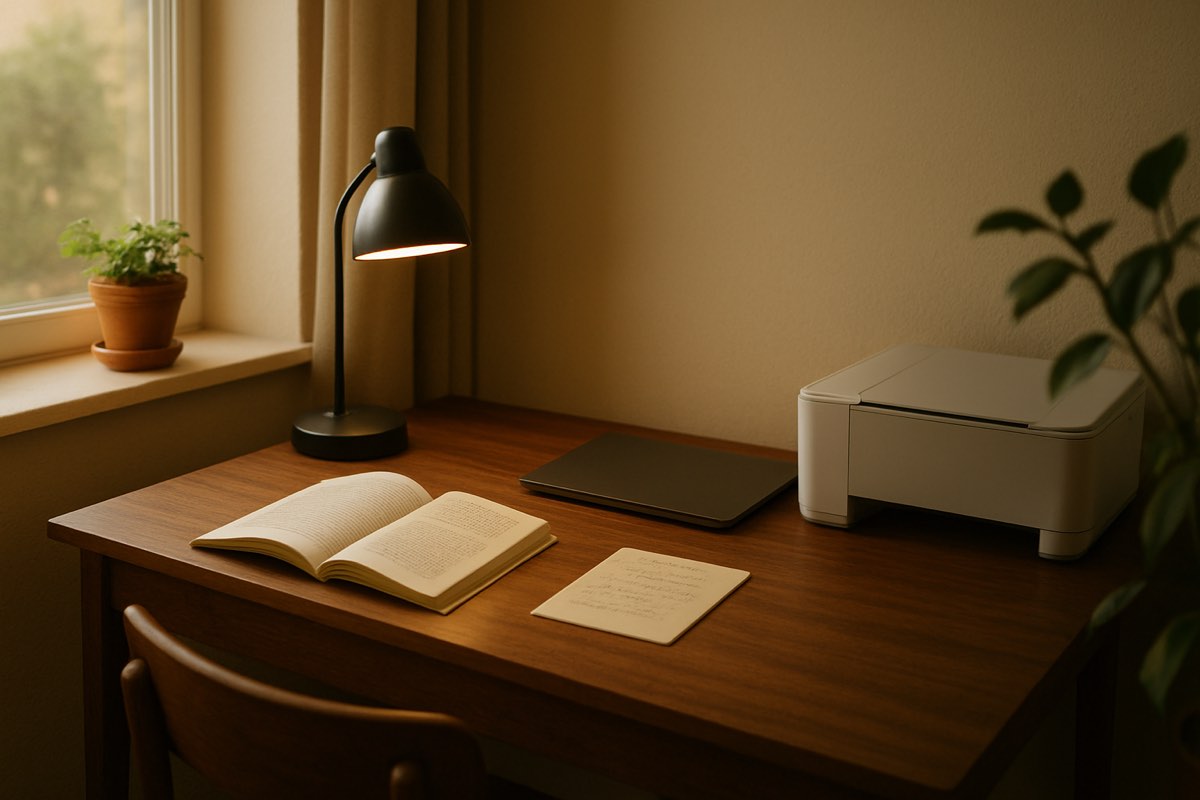
The evening became the real center of the day. On Saturday, I had cleared the table in the living room. Today, I moved the printer, computer, and several other devices there. It is beginning to feel like a more settled workspace.
The main thing I wanted to test was Flow, a focus app. Its greatest advantage, for me, is that it can read from and write to both my iOS Calendar and Mindful. This fits my needs extremely well. I do not want another isolated system to maintain. I want a simple interface for focus that can work with the calendar and reminders I already use.
More importantly, Hermes can still read the information in those systems. That means Flow may become one part of a connected workflow: I can plan and focus through the app, keep my schedule and reminders in familiar places, and still review or reorganize them with AI assistance when needed. I also tested whether Wanxi could make playlists for language learning, reading, organizing notes for professional study, and running. I printed them out afterwards. I was pleasantly surprised that the requests were understood and turned into something usable. It made new combinations feel much easier to create: an activity, a suitable atmosphere, and a small physical prompt on paper.
I also spent time exploring software on macOS. Safari has not worked very well for me so far. In Feishu, some conversations do not display properly, and its extension experience has not been especially satisfying. In the end, I chose an older version of Microsoft Edge. It feels cleaner and works better for what I need. Later that night, I also worked on fixing RSSHub.
Over the past two days, the most important realization has been that focus is not only about finding the right app or making a better plan. It is also about creating the right combination of time and space for myself.
For now, I think the bedroom and the living room should serve different purposes. The living room is genuinely better for studying. It gives the act of sitting down to learn a greater sense of intention and ritual. The bedroom can remain a place for rest and for spending time with friends when they visit, while the living room can gradually become a place for reading, learning, organizing, and focused work.
This distinction feels simple, but it may help me protect my attention more naturally.
Loading...
- About