What Safety Has to Do with Happiness
2026-10-25|2026-10-24
type
Post
status
Published
date
Oct 25, 2026
slug
safety-happiness
summary
A film about arbitrary loss becomes a reflection on safety, social support, and the limits of happiness rankings.
tags
Journal
category
Mindset
icon
password
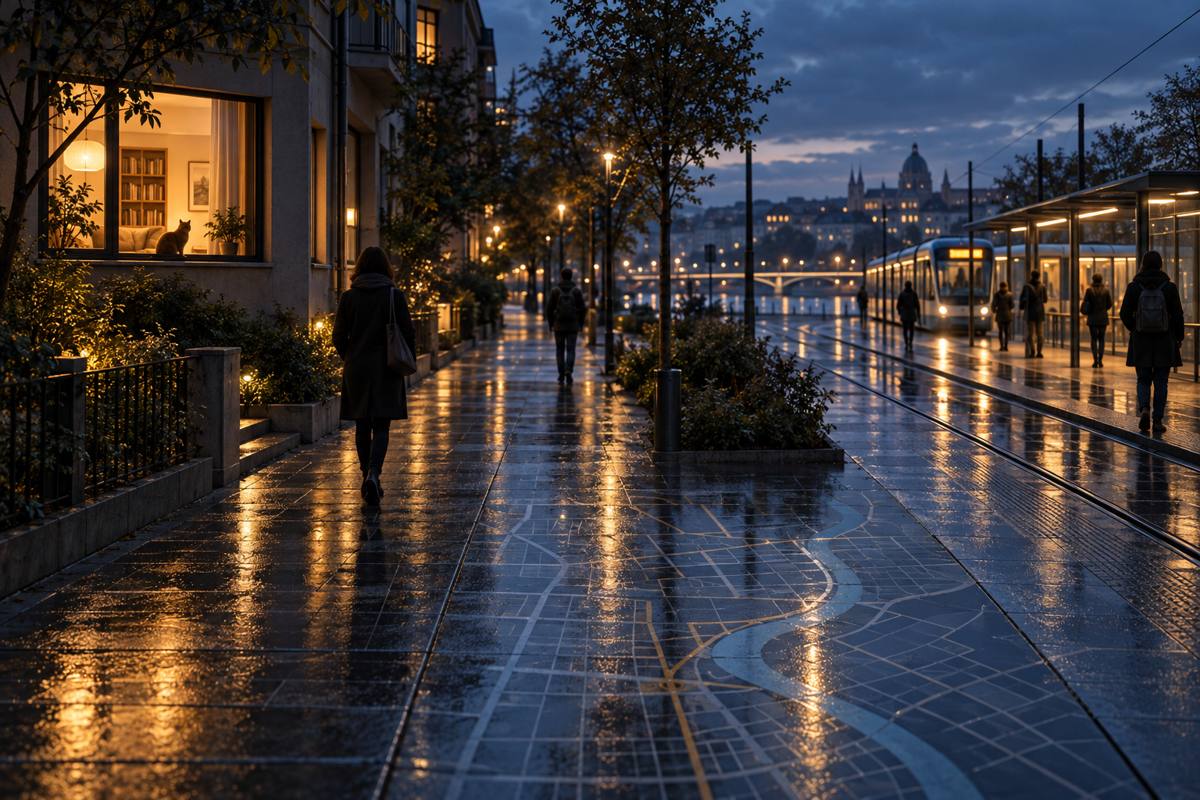
A film can leave a question behind that no statistic knows how to answer.
After watching Classmates Minus, I kept thinking about one of its gentlest characters. He is not presented as a hero. He is simply trying to keep his dignity while living close to the ground: working, making do, trying not to become cruel. Then violence enters the story with almost no warning. There is no satisfying explanation, no moral accounting, and no room for escape.
That abruptness feels unbearable because it violates an assumption many of us carry quietly: surely a decent person should at least be allowed the time to work things out.
The film refuses that consolation. Its final cruelty is not only that a life ends, but that all the ordinary unfinished things end with it—the next conversation, the next attempt at repair, the possibility that tomorrow might be a little better. A mother outlives her son. Friends who knew how to joke with him do not know how to speak into the silence that remains.
The scene made me think about the word safety in a different way.
Safety Is More Than the Absence of Danger
When people compare Taiwan, the United States, Germany, China, or any other place, the question often becomes a ranking: which country is safer, which city is more livable, where is the happiness index higher?
These are reasonable questions. A place where guns are less available, public transport is dependable, streets are well lit, emergency services work, and daily rules are legible offers a real advantage. A person should not have to treat every ordinary errand as a gamble.
But safety is not only a crime rate. It is also the background confidence that life will usually remain intelligible.
Can you walk home without constantly scanning for threat? Can a disagreement remain a disagreement instead of becoming irreversible? If something goes wrong, can you call for help and expect the system to respond? Are there institutions, neighbours, friends, or family members who can keep one bad day from turning into a total collapse?
This is why a sudden act of violence in a film can feel larger than the incident itself. It exposes the opposite of a livable world: a world in which an ordinary person can be swallowed by forces he does not understand and cannot reach.
The Geography of Risk
No country is a single experience.
In the United States, the image of danger is often shaped by the availability of firearms and by sharp differences between places. A quiet residential neighbourhood, a downtown business district, a late-night entertainment area, and a neighbourhood affected by poverty or drug markets can feel like entirely different social worlds. The point is not that every street is dangerous. It is that the possible cost of a conflict can be frighteningly high, and the map of risk can be uneven.
Germany offers another pattern. Daily public life is often orderly, and strict firearm regulation changes the texture of ordinary anxiety. Yet there are still places and hours where theft, harassment, intoxicated conflict, or organised crime become more visible. The practical skill is not permanent fear but learning the local map: which station area to avoid late at night, how a city changes after the last train, when to leave a quarrel alone.
Taiwan, as the film reminds us, also has its shadows. Organised crime, debt, local patronage, gambling, fraud, and grey networks do not disappear simply because daily life is convenient and many streets feel safe. But for most people, these forces are not the whole of life. What makes the film painful is its suggestion that someone with limited resources may have less distance from them, and less protection when the distance closes.
A livable society does not promise that nothing bad will happen. It makes bad things less likely, less lethal, and less isolating. It gives ordinary people more exits.
What a Happiness Ranking Can and Cannot See
This is also why I have become cautious about happiness rankings.
They are useful when read modestly. They can reveal something about income, health, trust, social support, freedom, public services, and the broad sense that people have some say over their lives. They remind us that material wealth alone is not enough, and that a society with reliable institutions can create a quieter form of well-being.
But a national average cannot tell us whether a particular young person can afford a home, whether an older parent has someone to rely on, whether a newcomer can enter the language and friendship networks of a new country, or whether a worker feels that one mistake would ruin everything.
Nor can it measure every kind of longing. A person may live in a clean, efficient city and still feel unseen. Another may live with less material comfort but have deep family ties, familiar streets, and a community that notices when they disappear.
Perhaps the most important question is not, “Which place is happiest?” It is, “What kind of insecurity is this place able to soften—and what kind does it leave to the individual?”
The Small Architecture of a Good Life
A good life is built partly from large systems and partly from small shelters.
The large systems are obvious: fair laws, functioning healthcare, public transport, schools, labour protections, and a real limit on violence. They matter because personal discipline cannot replace them. Telling people to be more resilient is a poor answer when the surrounding world gives them no margin for error.
The small shelters are quieter: a friend who answers the phone, a family member who knows your route home, an apartment with a light on, a public bench where one can sit without being moved along, a routine that leaves enough energy to notice someone else’s distress.
The men in Classmates Minus are not good at speaking directly about tenderness. They tease, posture, avoid the serious sentence. Yet their clumsy companionship matters precisely because life is unstable. Friendship cannot defeat violence or reverse death. It can only ensure that a person was not entirely alone while he was here.
That may sound too small. But perhaps it is the beginning of realism.
We cannot choose every country, city, or system we are born into. We can still learn to see the structures beneath our feelings: where risk is concentrated, what protections are real, which relationships are dependable, and what kinds of freedom are only decorative. We can also refuse the cruel fantasy that every outcome is earned.
The decent person in the film does not die because he deserved a worse life. He dies because the world is sometimes arbitrary, and because ordinary goodness is not armour.
A humane society begins from that recognition. It does not ask people to become invulnerable. It tries, in a thousand visible and invisible ways, to give them more time to live.
Loading...
- About